

Imagine this: You’re relaxing at home in Nairobi or Mombasa, scrolling through Instagram with a cold glass of passion juice on a warm afternoon. Suddenly, you see a stunning ad for handmade Maasai-inspired sandals. You click, place your order, and within minutes you receive confirmation that your package is on its way. That’s the magic of online sales in Kenya today.
If you haven’t noticed, the way we buy and sell has completely changed. Online sales in Kenya are growing rapidly, powered by smartphones, affordable internet, and mobile money platforms like M-Pesa. It’s exciting and filled with real money-making potential. Whether you’re selling locally made skincare products, imported electronics, African print fashion, handmade crafts, or services like tutoring, photography, or hairstyling, the internet can be your goldmine, if you know how to mine it properly.
But here’s the painful truth: many Kenyan business owners are still struggling to make the kind of revenue they should be making online. Why? Because they’re either doing it the wrong way, or not doing it at all.
And that’s exactly why this guide exists.
I want to help you, yes, you, turn your online business into a serious income stream. We’re going to explore smart strategies, practical marketing ideas, and clear, actionable steps to help you not just survive, but thrive in Kenya’s growing digital economy.
Are you ready to boost your online sales revenue in Kenya?
Let’s dive in.
Understanding the Kenyan E-Commerce Landscape
You need to first understand the landscape if you’re serious about increasing your online income in Kenya. Just like a busy market in Nairobi or a packed biashara street in Mombasa, Kenya’s e-commerce space is active, competitive, and full of opportunities, if you know where to look.
Kenya’s e-commerce market keeps expanding every year as more people shop online through their phones. With millions of Kenyans using mobile internet daily—and mobile money making payments easy, there are plenty of buyers with attention (and money) ready for the right products and services.
Important Players in the Game:
- Jumia Kenya: One of the biggest e-commerce platforms in Kenya. From electronics to groceries, sellers can list almost anything.
- Kilimall: A strong competitor known for affordable products and wide customer reach.
- Masoko, Sky.Garden, and Copia: Other platforms helping Kenyan businesses sell online with different models, some focusing on SMEs, others on last-mile delivery.
But don’t forget social platforms like Instagram, WhatsApp, Facebook, and TikTok, many Kenyan businesses are making serious money right there, even without having a full website.
Challenges to Consider:
Now, things aren’t perfect. Kenya has its own online business challenges too: delivery delays in remote areas, unstable internet in some regions, online fraud concerns, and occasional payment disputes.
But here’s the good part: with smart planning and the right tools, you can turn these challenges into opportunities. You’re here to cash out, not to fear problems, so let’s keep going.
How to Boost Revenue Through Online Sales in Kenya
1. Building a Profitable Online Presence

Let’s talk about your online sales. Imagine opening a shop in Nairobi CBD or along Moi Avenue without a signboard or even proper shelves. Customers will just pass. That’s exactly what happens when you don’t build your digital foundation well.
Start with a website. I cannot shout this enough, own your space online. A website is your digital property. It’s the place where customers get to know you, trust you, and pay you. It works 24/7, even when you’re sleeping.
But not just any website. You need a fast, secure, and mobile-friendly one. That’s where telaHosting comes in.
Why Choose telaHosting?
- Reliable uptime: Your site won’t randomly disappear.
- Fast loading speeds: No one likes to wait for a site to open.
- Affordable packages: Whether you’re a small startup or growing brand, there’s a plan for you.
- Excellent customer support: When power issues or something goes wrong, they’ve got your back.
Don’t Forget the Basics:
- A clean, professional layout
- Easy-to-navigate menus
- Clear product categories
- A contact page and live chat or WhatsApp button
You want people to land on your site and immediately feel, “Yes, this business is legit.” That trust is what turns browsers into buyers.
2. Optimizing Your Online Store for Sales
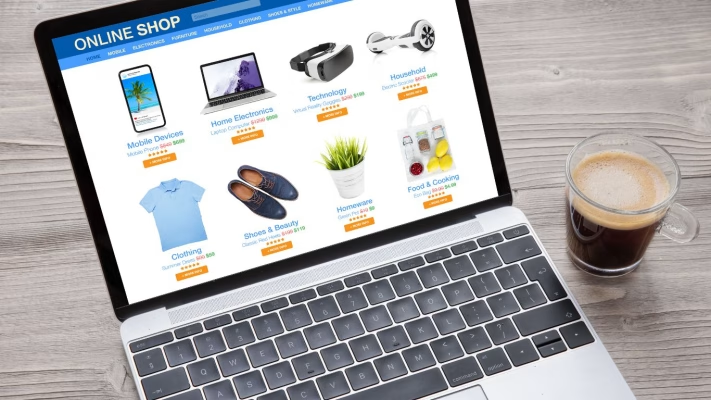
Having a website is great, but it’s not enough. Now let’s make sure it’s a money-making machine. Think of your site like a boutique in Westlands or along Moi Avenue, you want it clean, attractive, and easy to shop from.
(A). Speed is Everything
Imagine clicking on a website and it takes forever to load. What’s your first reaction? You close the tab, right? Your customers in Nairobi, Kisumu, or Eldoret are no different. If your site takes longer than five seconds to load, many will bounce, and head straight to your competitor who loads in two seconds flat.
Speed affects everything from user experience to search engine ranking. A slow website equals lost revenue.
Here’s what you can do:
- Optimize Images: Compress large photos without sacrificing quality. Tools like TinyPNG or using WebP format can significantly improve load time.
- Use Light Themes: Heavy themes with too many animations slow your site down. Choose clean, professional designs.
- Minimize Plugins: Too many plugins, especially on WordPress, can drag your speed down. Stick to essentials.
- Choose Reliable Hosting: telaHosting offers fast, secure, and optimized servers built for African businesses. No more frustrating downtimes.
Tip: Test your site speed using tools like Google PageSpeed Insights or GTmetrix. Aim for green scores across desktop and mobile.
(B). Make It Mobile-Friendly
Over 80% of online shoppers in Kenya browse and buy from their phones, thanks to affordable smartphones and mobile data. If your website doesn’t look great and function smoothly on mobile, you’re losing serious money.
Here’s what to fix:
- Responsive Design: Your website should automatically adjust to fit any screen size.
- Big, Clickable Buttons: Make “Add to Cart” or “Buy Now” buttons large and easy to tap.
- Simplified Navigation: Customers should find products and checkout pages within a few taps.
- Easy Checkout Process: Reduce steps. Allow guest checkout. Integrate M-Pesa for fast payments.
- WhatsApp Integration: Add a floating WhatsApp button for quick inquiries. Kenyans trust WhatsApp for business communication.
Try this: Use your own phone and attempt to buy something from your store. If it feels frustrating, fix it immediately.
(C). Product Listings that Actually Convert
Blurry photos and weak descriptions won’t sell. Your product listings are your salespeople, they must convince customers without you being there.
Your listings should include:
- High-Quality Photos: Show multiple angles. Use natural lighting. If it’s fashion, show someone wearing it.
- Clear, Compelling Titles: Instead of “Red Dress,” write “Elegant Red Ankara Bodycon Dress – Sizes S to XXL.”
- Detailed Descriptions: Include fabric type, size guide, benefits, and care instructions.
- Trust Elements: Add customer reviews and ratings.
- Urgency Phrases: “Only 3 left,” “Fast-selling,” or “Limited Stock” encourage faster decisions.
| Listing Element | Bad Example | Good Example |
| Title | Red Dress | Elegant Red Ankara Bodycon Dress – Sizes S to XXL |
| Image | One blurry photo | 3 high-res photos (front, back, on model) |
| Description | Nice dress. | Handmade with vibrant Ankara fabric. Fitted design with zip closure. Perfect for weddings and events. |
| Call to Action | None | “Order Now – Only 5 Left in Stock!” |
Your goal is to remove every doubt before the customer clicks “Buy.”
(D). Design Psychology
Have you ever walked into a store in a mall and suddenly felt like buying something? That’s design psychology at work. Your website should create that same emotional pull.
Color, layout, and visual cues influence buying decisions.
Design Tips That Drive Sales:
(a). Use Strategic Colors:
- Red: Creates urgency, great for flash sales.
- Blue: Builds trust, ideal for checkout pages.
- Green: Associated with growth and affordability, great for eco or budget-friendly brands.
(b). Add Countdown Timers: Perfect for limited-time discounts.
(c). Popup Offers: Offer 10% off or free delivery for first-time visitors, without being intrusive.
(d). Sticky “Buy Now” Buttons: Keep purchase buttons visible, especially on mobile.
(e). Clean Layout: Avoid clutter. Use plenty of white space for readability.
Use tools like Hotjar to track where users click most. It helps you optimize what works.
By focusing on these details, you’re not just building a website, you’re creating a shopping experience that keeps customers coming back.
3. Leveraging Social Media to Drive Sales

This is Kenya, where people spend hours on Instagram and TikTok, scrolling through reels, gossip, and products. So if you’re not using social media for your business, you’re leaving money on the table.
(A). Pick Your Platform Wisely
- Instagram for fashion, beauty, and lifestyle brands
- TikTok for viral products and Gen Z
- Facebook for older demographics and local communities
- WhatsApp for customer support and order confirmation
(B). Content is King
Show your products in action. Post testimonials, behind-the-scenes, “how to use” videos, and customer reviews. Make your brand relatable.
Talk to your audience like you’re talking to your friend. No boring posts. No stiff captions. Make it fun, engaging, and visual.
(C). Use Influencers
You don’t need to pay KSh 500,000 to get a big Kenyan celebrity to post for you. Micro-influencers with 5,000–50,000 followers often deliver better ROI. They’re more relatable, and their audience is more engaged.
Create a story. Not just “Buy my product.” Tell people why they need it.
4. Digital Marketing Strategies to Drive Engagement

You could be waiting a very long time if you’re hoping customers will stumble upon your online store. Digital marketing helps with that. It’s like speaking in a busy marketplace, but more elegant and more accurate.
Let me show you what works well in Kenya’s fast-changing digital environment.
(A). SEO (Search Engine Optimization)
This simply means that when people search on Google, your website shows up. If someone searches for “affordable sneakers in Nairobi” and finds your website, that’s SEO working.
How to achieve it:
- When creating product titles and descriptions, use keywords such as “affordable phone accessories in Kenya.”
- Write blog posts that provide solutions to frequently asked questions, such as “Top Ankara wedding styles for 2025.”
- Add alt text to your images (Google loves that).
- Use location-specific keywords like “Nairobi delivery,” “Mombasa store,” “Kisumu orders,” or “CBD pickup.”
SEO takes time, but once you start ranking, the free traffic can change your business.
(B). Email Marketing That Feels Personal
Kenyans love deals and exclusivity. Build an email list and send:
- Weekly discounts
- Product launches
- Flash sales
- Birthday messages
Use tools like Mailchimp or Sender, but don’t be annoying, make it personal. Use their name, tailor offers to their interests, and always give them the option to opt-out.
(C). Paid Ads
If you’ve got a small budget, invest it wisely. Here’s what works:
- Facebook Ads: Great reach for broad audiences and community targeting.
- Instagram Ads: Visual and powerful for fashion, food, beauty, and lifestyle brands.
- Google Search Ads: Perfect for targeting people already searching to buy.
Start small (even KES 500–1,000), test different audiences, and track conversions. Don’t boost blindly, use Ads Manager for proper targeting.
(D). WhatsApp Broadcast and Status Updates
Yes, WhatsApp is a marketing tool in Kenya too. Create a business account and:
- Share your latest products
- Post behind-the-scenes content on status
- Send broadcasts to regular buyers (with consent)
Just make sure you’re not spamming. Be strategic.
5. Mastering Payment Gateways and Logistics

If there’s one thing that can kill an online sale faster than a blackout, it’s a failed payment or messy delivery. So, let’s fix that.
(A). Reliable Payment Gateways
You need a secure, easy-to-use payment gateway. Kenyan shoppers are still cautious about online transactions, so trust is everything.
Best Payment Options in Kenya:
| Payment Option | Features | Notes |
| M-PESA | Most trusted, mobile-first, fast confirmations | Offer Till Number / Paybill + clear instructions |
| Airtel Money | Good alternative to M-PESA, strong mobile usage | Useful for customers who prefer Airtel |
| Flutterwave | Cards + mobile money + global payments | Great for cross-border customers |
| Paystack | Easy setup, cards, bank transfers | Works well for online checkout |
Also, include card payment options where possible, and display your business name clearly to build trust. If you’re using M-PESA, show the Till/Paybill name exactly as it appears so customers feel safe.
(B). Logistics and Delivery
If you’ve ever had to explain your location five times to a rider, you know delivery matters. In Kenya, delivery is about reliability as much as speed. Do your best to partner with logistics that are consistent, because weak delivery can ruin a great product.
Kenya’s Common Delivery Options:
- Rider/dispatch services for same-day delivery within major towns (Nairobi, Mombasa, Kisumu, Nakuru, Eldoret).
- Courier services for nationwide deliveries (town-to-town shipping).
- International couriers for customers abroad (for export orders and diaspora clients).
Delivery structure that builds trust:
- Same-day delivery for nearby orders (within the city)
- Next-day delivery for in-town orders placed late
- Nationwide delivery with clear timelines (e.g., 1–3 working days)
- Pickup options for local customers (shop pickup / pickup point)
Track everything. Send updates by SMS, email, or WhatsApp. Customers want to know where their package is and when it will arrive. If you go silent, they’ll assume the worst.
(C). Handling Refunds and Returns
Set a clear return policy and display it boldly on your website. Make it fair. Offer store credit or easy exchanges. This builds confidence and loyalty.
- State your return window clearly (e.g., 3–7 days after delivery).
- Specify refund processing time (e.g., 3–5 business days).
- Explain who pays return shipping costs.
- List what items can’t be returned (e.g., used items, perishables, innerwear).
By implementing these steps, you’ll reduce disputes, improve customer satisfaction, and increase repeat purchases.
6. Customer Service That Converts

Let me tell you a secret: people don’t remember how fast their order came. They remember how you made them feel. Customer service is the soul of your online business. Done right, it becomes your biggest marketing tool.
- Respond Fast: Kenyans don’t wait around. (You know it’s true!) Respond as soon as possible if someone messages you regarding a product. Install live chat features on your website, use WhatsApp Business Auto Replies, and always be courteous, even when your clients aren’t.
- React Quickly: As i said people forget how quickly their orders arrived. They recall the feelings you evoked in them. The foundation of your internet business is customer service. When done correctly, it becomes your most powerful marketing tool.
- Make Everything Your Own: Refer to clients by name. Inquire about their experience. Suggest similar products. Give them the impression that you are more than just interested in their money.
- Make use of friendly, conversational words: For example: Hi Tosin! Just letting you know your order has been packed and is on its way. You’ll love it! or Thanks for ordering again! We added a small gift just for you.” e.t.c.
- Use Feedback to Improve: Send out short surveys. Ask for reviews. Use this feedback to improve your packaging, delivery, or even product quality.
Bonus Tip: If a customer has a problem, fix it fast and throw in a small discount or freebie. They’ll become your biggest promoter.
7. Pricing Strategies to Maintain Profits

Let’s talk about money. Of course you want to make profit, right? But you also want to stay competitive. Pricing your products isn’t just about covering costs, it’s about positioning your brand in the Kenyan market.
(A). Pricing Psychology
Have you ever noticed why some products are priced at KSh 999 instead of KSh 1,000? That small difference makes it feel cheaper. Use this strategy wisely.
Other smart tactics include:
- “Only 3 Left in Stock!”
- “Limited Time Offer”
- “Buy 2 Get 1 Free”
Scarcity and urgency push customers to act quickly instead of postponing the purchase.
(B). Know Your Competitors
Before setting your price, check what others are charging on Jumia Kenya, Instagram shops, Facebook Marketplace, and independent websites.
Then decide: Do you want to be the affordable option? Or do you want to position yourself as premium?
Sometimes charging slightly higher can actually increase trust, especially if your branding, packaging, and customer service match the price.
(C). Create Pricing Tiers
Give customers options that fit their budget. For example:
- KSh 3,000 – Basic Package
- KSh 5,000 – Premium Package
- KSh 7,500 – Deluxe Package (with bonus gift)
People love having choices. Just make sure the differences between packages are clear and easy to understand.
9. Using Data Analytics to Increase Sales

If you don’t track, you can’t improve. That’s why analytics should be your best friend. Data helps you see what’s working in your Kenyan online store, and what’s wasting your time and money.
Things to Monitor:
- Page Views: Which pages are customers visiting the most?
- Bounce Rate: Are visitors leaving your site too quickly?
- Cart Abandonment: How many people add items to cart but never complete payment?
- Top-Selling Items: What products do Kenyans actually want?
Use free tools like Google Analytics, Meta (Facebook) Pixel, and your website’s built-in statistics (especially if you’re using telaHosting).
Turn Data Into Action
- If people drop off at checkout, maybe your payment process is too long, or M-PESA instructions aren’t clear.
- If one product keeps selling out, stock more of it and promote it harder.
- If traffic is high but sales are low, your pricing, photos, or product descriptions may need improvement.
A/B Testing
Test different headlines, images, prices, or call-to-action buttons like “Buy Now” vs “Order Today.”
See which version performs better, and stick with what works.
Analytics makes you smarter. And smarter businesses in Kenya make more money.
10. Mobile Commerce to Boost Business

Mobile Commerce (M-Commerce) in Kenya
Most Kenyans don’t sit behind laptops all day, but what do we carry everywhere? Our phones. The real money is in mobile commerce (m-commerce). If you’re not optimizing for mobile, you’re leaving serious money on the table.
In Kenya, the majority of internet users access the web through mobile devices. They’re not just browsing, they’re shopping, paying bills via M-Pesa, booking services, and even learning online.
This means your entire strategy must be mobile-first.
Tips to Win at Mobile Commerce
- Responsive Website Design: Your site must adjust perfectly to any screen size. If customers have to zoom in to read text, they’ll leave.
- Fast Load Time: Data isn’t cheap and patience is limited. Your site must load quickly.
- Easy Checkout: Reduce steps. Integrate M-Pesa, Airtel Money, and card payments. Keep it simple.
- WhatsApp Integration: Many Kenyans prefer chatting before paying. Trust is built through conversation.
Case Study
Meet Amina, a fashion entrepreneur in Nairobi. She built her business using Instagram + WhatsApp + M-Pesa. Her Instagram highlights show products clearly, her WhatsApp link is in bio, and she posts customer reviews daily.
In six months, she doubled her monthly revenue, purely from mobile traffic. No complex setup. Just smart, mobile-first strategy.
Selling on Kenyan Marketplaces
Think of Kenyan online marketplaces like digital versions of Gikomba or Toi Market, bigger and nationwide. They already have traffic and trust. You just plug in and sell.
Top Online Marketplaces in Kenya:
| Marketplace | Best For | Commission |
| Jumia Kenya | Electronics, fashion, groceries | 5–15% |
| Kilimall | Affordable goods, gadgets | Varies |
| Sky.Garden | SMEs and social sellers | Custom rates |
| Masoko | General retail | Varies |
Optimizing Your Listings
- High-Quality Images: Poor images cost sales.
- Compelling Descriptions: Instead of “Red bag,” write “Elegant red leather handbag – perfect for weddings and events.”
- Smart Pricing: Factor in commission when setting your price.
Marketplace vs. Your Own Website
| Category | Marketplace | Your Own Website |
| Ownership | Platform controls the rules. | You control everything. |
| Fees | Commission per sale. | Keep most profits. |
| Customer Data | Limited access. | Full access for remarketing. |
| Branding | Marketplace brand dominates. | Your brand grows. |
| Risk | Account can be suspended. | You own your store. |
Common Mistakes in Online Sales (Kenya)
1. No Online Presence
No website, no Instagram, no WhatsApp Business? That’s like opening a shop and hiding it. Visibility equals credibility.
2. Poor Product Photos
Online sales are visual. Use clear, well-lit photos. Write detailed descriptions with size, color, benefits, and usage.
3. Ignoring Customer Complaints
One bad experience spreads fast on social media. Respond quickly and offer solutions.
4. Overpromising
If you promise next-day delivery, deliver. Under-promise and over-deliver.
5. Staying Legal and Compliant
Register your business in Kenya. Stay compliant with tax regulations. Use trusted payment providers. It builds trust and unlocks bigger opportunities.
How to Bounce Back From Failure
| Step | Action |
| Reevaluate Product | Check engagement and demand. |
| Collect Feedback | Use Instagram polls or WhatsApp surveys. |
| Try New Marketing | Test TikTok, Facebook Ads, or content marketing. |
| Refresh Branding | Improve logo, packaging, visuals. |
| Learn & Adjust | Keep improving consistently. |
Conclusion
Boosting online sales revenue in Kenya isn’t magic, it’s strategy. Build a strong digital foundation, optimize for mobile, use marketplaces wisely, track your data, and market smartly.
The internet is noisy. Competition is real. But so is your hustle.
Start today. Build that website. Optimize your mobile store. Run that ad. Reply to that WhatsApp message.
Now go turn those clicks into cash.
FAQs
1. What are the best platforms to sell online in Kenya?
Jumia Kenya, Kilimall, Sky.Garden, Instagram, and WhatsApp Business.
2. How can I advertise cheaply?
Start with organic posts, referrals, and WhatsApp status. Then test small Facebook and Instagram ads.
3. What payment methods do Kenyans trust?
M-Pesa, Airtel Money, card payments, and trusted gateways like Flutterwave and Paystack.
4. How do I increase traffic?
Use SEO, social media marketing, influencers, and paid ads.
5. Website or social media?
Use both. Social media brings visibility; your website builds long-term control and profitability.